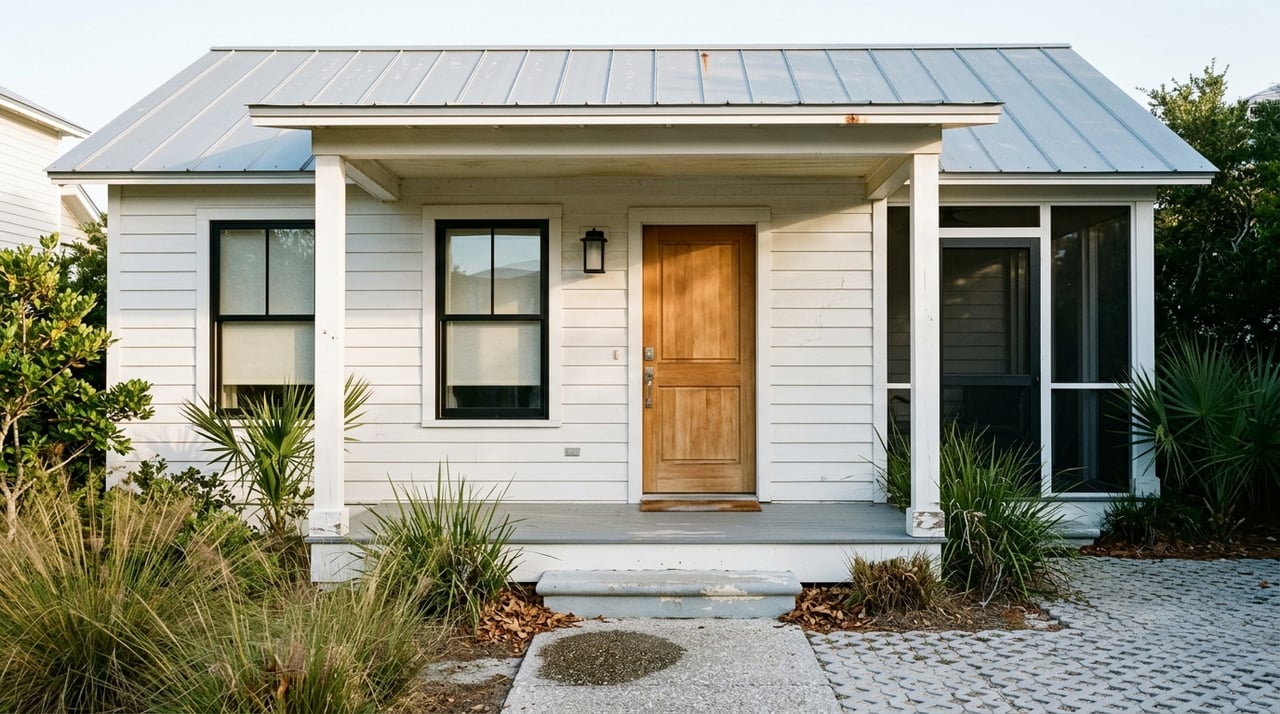
Buying A Classic Beach Cottage In Neptune Beach
July 2, 2026
July 2, 2026
Dreaming about a classic beach cottage in Neptune Beach? You are not alone. These older homes have a charm that newer coastal builds often cannot match, but buying one takes more than falling in love with wood floors, a compact footprint, or a walkable beach location. If you want to buy with confidence, it helps to understand how local history, zoning, flood rules, and renovation limits can shape your plans. Let’s dive in.
In Neptune Beach, a classic beach cottage usually refers to an older, modest-scale home with period character rather than a newer coastal property. The city’s historical audit points to many surviving homes built between 1929 and 1951, including homes on streets like Seagate Avenue, Hopkins Street, Margaret Street, Myra Street, and Oleander Street.
That older housing stock is part of what gives Neptune Beach its identity. The city’s long-range planning also emphasizes preserving residential neighborhood character and encouraging rehabilitation of historically significant housing, which matters if you hope to update a cottage without losing what makes it special.
Neptune Beach stands out as a small coastal community between Atlantic Beach and Jacksonville Beach. For many buyers, that smaller scale is part of the draw.
If you are looking for a home with personality, a classic cottage can offer a different experience from a new-construction beach house. You may find original design details, a more established setting, and a home that feels tied to the area’s history.
The same features that make these homes appealing can also create extra steps during your purchase. In Neptune Beach, older homes often come with site limits, renovation rules, and flood-related considerations that are important to review before you close.
This is not a reason to avoid the market. It simply means you should approach a cottage purchase with a clear due-diligence plan, especially if you expect to renovate, add outdoor features, or change the layout over time.
For any coastal property, floodplain compliance should be near the top of your checklist. Neptune Beach participates in FEMA’s Community Rating System, and the city says its current Flood Insurance Rate Map became effective on November 2, 2018.
You will want to confirm the property’s flood zone and ask whether it sits in a coastal high hazard area. That matters because additions, elevation work, and rebuild plans may be affected by flood-zone standards, base flood elevation rules, and local code requirements.
In Neptune Beach, flood issues are not just about insurance. They can directly affect design choices if you want to improve the home later.
The land-development code ties building-height reference points in flood zones to FEMA base flood elevation. The city also says new buildings in coastal high hazard areas must be located landward of the reach of mean high tide, which makes early site review especially important for buyers thinking long term.
Many buyers picture updating an older beach cottage after closing. That is common, but Neptune Beach has a detailed permit process for the types of work that often come up in older homes.
The city’s permit page lists work such as remodeling, decks, patios, walkways, driveways, electrical, HVAC, plumbing, roofing, windows, skylights, garage doors, fences, pools, tree work, and right-of-way work. Building permits generally require detailed plans, a recent certified land survey, energy sheets if square footage is added, and proof that the project meets 130 mph wind-code requirements.
If you are buying a cottage with expansion in mind, think beyond finishes and floor plans. In Neptune Beach, the practical questions often include whether your lot can support the changes, whether the work affects drainage or impervious coverage, and whether flood standards will change the scope or cost.
This is one reason buyers benefit from planning early. A cottage that looks simple to update on paper may be more complex once permits and site limits are part of the conversation.
One detail many buyers overlook is lot coverage. Neptune Beach limits impervious surface to 50% in the R-1 through R-4 districts.
That can affect projects like larger driveways, patios, pools, and additions. If you are buying a smaller cottage on a compact lot, this rule can shape what you can realistically add later.
Stormwater rules also matter when you are evaluating an older home. Neptune Beach says the minimum finish floor elevation for habitable living spaces is 18 inches above the road crown, although flood-zone standards may require more.
For buyers considering a major renovation, raising living space or reworking the structure may become part of the discussion. It is better to learn that before purchase than after you start pricing contractors.
Classic beach cottages often sit on lots that do not look like today’s standard layout. In Neptune Beach, zoning rules recognize that some smaller lots lawfully platted and recorded before December 2, 2019 can remain valid even if they do not meet newer minimum dimensions.
That is helpful context when you are shopping older homes. A cottage on a smaller lot is not automatically a red flag, but you should verify the zoning district and whether the lot has grandfathered status if dimensions are tight.
The city’s zoning rules state that R-4 is intended for single-family and two-family residences. Existing two-family homes on lots of at least 5,000 square feet can be treated as conforming if they meet retrofit requirements.
If you are looking at a property with a two-unit setup or an older layout that seems unusual, ask for clear confirmation of how the property is classified. That step can help avoid surprises after closing.
At the beach, parking is never just a minor detail. Neptune Beach’s code says properties built with minimum front-yard setbacks should still provide adequate parking through a side or rear driveway, parking court, garage, or carport.
The city also limits the combined width of driveways along a street-facing setback to 20 feet in residential districts. For buyers who want to redesign the front approach or add paved parking, this can become an important limitation.
Oceanfront lots are treated as double-frontage lots in Neptune Beach. That means they need a front on both the street side and the ocean side.
If you are considering an oceanfront cottage, this is an important piece of context for planning access, setbacks, and future exterior changes.
If you hope to keep a boat, trailer, or recreational equipment at the property, review the code before you buy. Neptune Beach says major recreational equipment cannot be stored in the front or corner side yard.
It may only be placed in side or rear yards, and the city limits storage to two items no longer than 28 feet each. For a compact cottage lot, that rule can have a real impact on how functional the property feels for your lifestyle.
This is one of the most important issues for second-home buyers and investors. Neptune Beach says short-term rentals and other commercial activities, except home-based businesses, are prohibited in all residential zoning districts.
The city defines a short-term rental as a stay of less than 28 days. If you are buying a cottage and hoping to use it as a vacation rental, you need to know that upfront and base your purchase decision on the actual local rules.
Neptune Beach created a Historical Review Board in 2025. The board can hear requests tied to historical significance and certificates of appropriateness.
For buyers, that does not mean every older home faces the same review path. It does mean that if a cottage has historic significance and you want to make changes later, you may face an additional review layer for historically sensitive work.
Living near the sand comes with local responsibilities as well as perks. Neptune Beach prohibits alcohol and glass on the beach, restricts boats and motorized beach apparatus, and prohibits climbing dunes or removing beach vegetation.
These rules reflect the city’s protection-oriented coastal environment. If you are thinking about access paths or exterior improvements near dune areas, it is smart to keep those protections in mind early.
Before you buy a classic beach cottage in Neptune Beach, focus on the details that can affect both value and future plans.
Buying a classic cottage in Neptune Beach is often about balancing charm with practicality. You want the character, the coastal setting, and the lifestyle, but you also want clear answers about what you can do with the property after closing.
That is where local guidance becomes valuable. A well-planned purchase can help you avoid costly surprises and move forward with a better understanding of the home, the lot, and the city rules that shape both.
If you are considering a classic beach cottage in Neptune Beach and want a high-touch local team to help you evaluate the details, reach out to Tonya O'Quinn for expert guidance on your next move.
Real Estate
Whether you’re looking for food, parking, restrooms, or just a general schedule of events, we’ve got you covered!

Real Estate
Explore the trends in decreasing home prices and increasing affordability, impacting the market and buyers.
Real Estate
This is our dream home and Tonya made it possible for us to have this home.

Real Estate
These magnificent creatures have long captured the imagination of people around the world.

Real Estate
The City of Jacksonville's fireworks display will launch from two locations this year.
We pride ourselves in providing personalized solutions that bring our clients closer to their dream properties and enhance their long-term wealth.