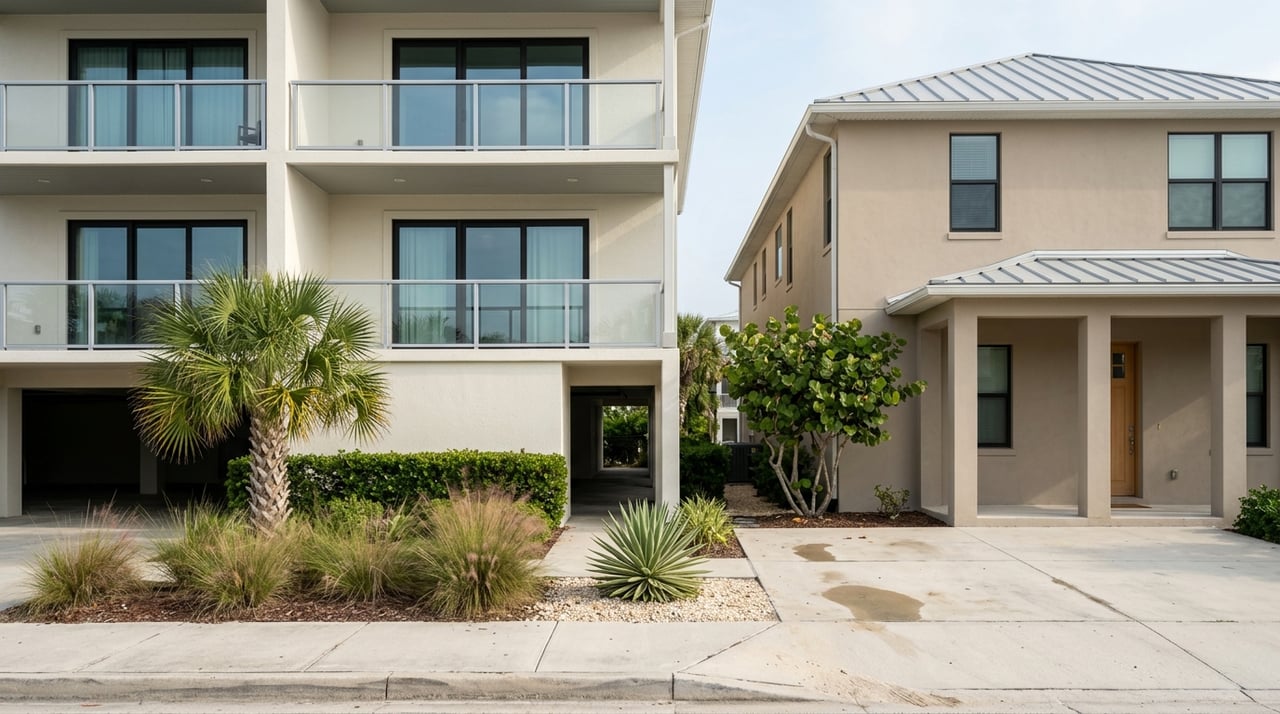
Jacksonville Beach Condos vs Homes: What Buyers Should Know
April 16, 2026
April 16, 2026
Trying to decide between a condo and a house in Jacksonville Beach? It is a smart question, especially in a coastal market where monthly fees, insurance, maintenance, and rental rules can change the math fast. If you want the right fit for your lifestyle, budget, and long-term plans, you need more than a quick price comparison. This guide breaks down how Jacksonville Beach condos and homes compare so you can buy with more clarity and confidence. Let’s dive in.
Jacksonville Beach is active, but it is not moving at a frantic pace. According to Redfin’s Jacksonville Beach market data, the city’s median sale price across all home types is $640,000, up 3.2% year over year.
Condo pricing sits a bit lower on the entry point side. Redfin’s condo data shows 87 condos for sale with a median listing price of $535,000, while Realtor.com’s Jacksonville Beach market snapshot reports a median listing price of $699,900, 243 homes for sale, and a 72-day median time on market. Realtor.com also classifies Jacksonville Beach as a balanced market, which means buyers and sellers both have room to negotiate.
The big takeaway is simple: condos may offer a lower purchase price, but the sticker price alone does not tell you which option is more affordable over time.
For many buyers, condos offer a more convenient ownership experience. In Florida, condo associations are responsible for maintaining common elements and handling many building-level expenses, which can reduce the amount of day-to-day upkeep you handle yourself under Florida condo law.
That setup can be especially appealing in a beach market. If you want less exterior maintenance, shared amenities, and a more lock-and-leave lifestyle, a condo may fit your needs well.
Still, convenience comes with tradeoffs. In Jacksonville Beach, condo buyers need to look closely at fees, reserves, inspections, and association rules before assuming a unit is the easier or cheaper option.
A detached home usually gives you more control over the property itself. You are less tied to building-wide decisions, shared repair obligations, and association-level financial issues that can affect a condo community.
Many buyers also prefer the privacy and flexibility that come with a house. If you want more space, fewer shared walls, and more freedom around renovations or use, a single-family home may better match your goals.
That said, a house usually means you are directly responsible for maintenance, repairs, and property-level insurance costs. If the home is part of an HOA, you may still have rules and fees, so it is important to review those documents too.
When buyers compare Jacksonville Beach condos versus homes, monthly cost matters as much as purchase price. A condo fee often covers more than amenities. Under Florida law, common expenses can include operation, maintenance, repair, replacement, and protection of common elements and association property, along with insurance obligations tied to the building.
That means a condo with a lower purchase price may still cost more each month than expected. A detached home may have fewer shared fees, but you will usually carry more of the repair and maintenance burden directly.
The right question is not just, “Which one is cheaper?” It is, “Which cost structure best matches how you want to live?”
This is where condo due diligence becomes especially important in Jacksonville Beach. Under Florida’s milestone inspection law, buildings that are three habitable stories or more must complete milestone inspections by age 30 and every 10 years after that. In some saltwater locations, the first inspection can be required at 25 years.
Florida also requires structural integrity reserve studies, known as SIRS, for qualifying condo associations. For budgets adopted on or after January 1, 2025, reserve waivers are not allowed. These studies cover major items like roofing, structure, fire protection, plumbing, electrical, waterproofing, windows, and exterior doors.
For buyers, that can mean higher dues or special assessments, especially in older coastal buildings. This does not make condos a bad choice, but it does mean you need to understand the building’s financial health before you commit.
If you are buying a condo in Jacksonville Beach, document review is not a formality. It is one of the most important parts of the purchase process.
Florida’s condo disclosure framework requires buyers to receive information about use restrictions, leasing restrictions, recurring fees, and assessments under Chapter 718 of the Florida Statutes. That means you should closely review the declaration, bylaws, current budget, reserve study, milestone inspection summary, insurance deductibles, and any history of special assessments.
These questions can dramatically change how attractive a condo looks once you move beyond the list price.
If rental income matters to you, Jacksonville Beach requires extra homework. The city allows short-term vacation rentals in zoning districts where residential uses are permitted, but it defines them as stays of less than 30 days, or one calendar month, more than three times per year.
According to the City of Jacksonville Beach short-term vacation rental rules, qualifying properties need a Short-Term Vacation Rental Certificate and supporting items such as tax registrations, inspections, and state licensing. The city lists a $150 initial and annual registration fee plus a $79.20 annual local business tax receipt fee, with renewal due by October 1.
But city approval is only part of the picture. A condo building may still limit or prohibit short-term rentals through its governing documents, even if zoning allows the use. If you are buying for rental potential, always verify both the city rules and the association rules.
Resale is another area where property type matters. Redfin has reported that Florida condo resale has been more fragile than single-family resale in recent years, especially in coastal markets, due in part to rising HOA dues, insurance costs, and buyer concern about waterfront building obligations.
That does not mean every Jacksonville Beach condo is a weak resale choice. It means resale value is likely to depend heavily on the specifics: building age, reserve health, fee burden, rental policy, views, location, and how long you plan to hold the property.
In a balanced market where homes are selling at about 96% of list price per Realtor.com’s local market data, well-positioned properties can still perform well. The difference is that condo buyers often need to underwrite the building, not just the unit.
A condo may be the better fit if you want a lower entry point, less direct maintenance, and a more streamlined beach lifestyle. It can also make sense if shared amenities and a lock-and-leave setup matter more to you than having total control over the property.
A detached home may be the better fit if you value privacy, flexibility, and independence. It often works better for buyers who want more say over repairs, renovations, and day-to-day property use, even if that means taking on more upkeep.
Here is a simple way to frame it:
| If you value... | A condo may fit better | A home may fit better |
|---|---|---|
| Lower entry price | Yes | Sometimes |
| Less direct maintenance | Yes | No |
| More privacy | No | Yes |
| More control | No | Yes |
| Shared amenities | Yes | Sometimes |
| Fewer building-wide obligations | No | Yes |
| Easier lock-and-leave ownership | Yes | Sometimes |
The best choice depends on your budget, risk tolerance, and how you plan to use the property over the next several years.
If you want help comparing Jacksonville Beach condos and homes based on your goals, budget, and ownership plans, Tonya O'Quinn can guide you through the tradeoffs with local insight and concierge-level support.

Real Estate
Whether you’re looking for food, parking, restrooms, or just a general schedule of events, we’ve got you covered!

Real Estate
Explore the trends in decreasing home prices and increasing affordability, impacting the market and buyers.
Real Estate
This is our dream home and Tonya made it possible for us to have this home.

Real Estate
These magnificent creatures have long captured the imagination of people around the world.

Real Estate
The City of Jacksonville's fireworks display will launch from two locations this year.
We pride ourselves in providing personalized solutions that bring our clients closer to their dream properties and enhance their long-term wealth.